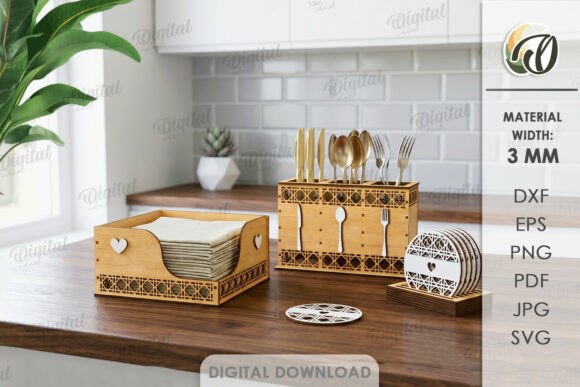
3D Kitchen Organizer Sets Bundle Laser
When I first opened the zip folder for the 3D Kitchen Organizer Sets Bundle Laser, my immediate reaction was less about the specific imagery and more about the structural promise of the file. As a designer who spends half my life troubleshooting stitch density and the other half trying to sell finished goods, I look at digital assets with a critical eye. Does this design hold up? Will it translate well from screen to fabric? And most importantly, will it make my customers feel like they bought something worth their money?
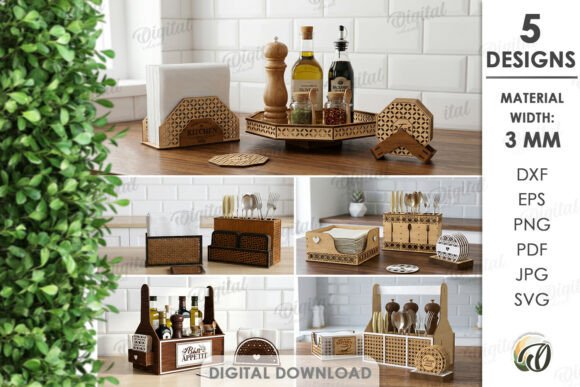
This is a digital product containing five distinct designs focused on kitchen organization themes. It is crucial to remember that no physical goods are sent; you are purchasing the digital embroidery file itself. The photos provided by the creator are intended only for inspiration, which means part of my job as a reviewer is to mentally project these files onto real-world substrates. Here is my honest breakdown of how this bundle performs in a real studio environment.
First Impressions: Mood and Visual Personality
The theme of "Kitchen Organizers" might sound mundane, but in the world of handmade goods, practicality sells. This bundle captures a mood of tidy efficiency mixed with cozy domesticity. The 3D effect implied in the title suggests depth and dimensionality, which is a strong selling point for modern embroidery trends. When I reviewed the layouts, I noticed a clear visual hierarchy. The designs don’t feel cluttered, even though they represent organized items. There is a balance between detail and negative space that makes them versatile.
For an Etsy seller or a crafter looking to expand their shop inventory, this bundle offers a cohesive aesthetic. You aren't getting five random, disconnected graphics; you are getting a set that feels like it belongs together. This consistency is vital for brand building. If you are creating a line of matching tea towels and aprons, having a unified design language helps your boutique branding stand out. The laser-cut style referenced in the title implies sharp lines and precise edges, which translates beautifully to machine embroidery when executed correctly.
Real-World Application: Where This Design Shines
I put the mental mockups together for various products to see where this machine embroidery design would truly excel. The strongest use case here is clearly in home decor and kitchen textiles.
- Tea Towels and Aprons: These are the low-hanging fruit for this bundle. The kitchen theme is literal and appropriate. Because the designs likely feature bold shapes suitable for a 3D effect, they pop nicely against the cotton texture of a towel. It creates an instant personalized gift vibe.
- Tote Bag Designs: Canvas tote bags are a staple for craft fairs. A sturdy canvas provides the perfect foundation for a dense fill stitch pattern. If you position this design centrally on a tote bag, it acts as both a statement piece and a functional advertisement for your brand.
- Nursery and Baby Items: While the theme is kitchen-focused, the clean lines and organizational motifs can work surprisingly well for baby gifts. Think of a personalized bib or a small blanket for a new parent who appreciates order. The softness of the embroidery contrasts nicely with the structured theme.
- Commercial Embroidery Projects: For those running a small business, versatility is key. This bundle allows you to create a "Home Organization" collection. You could offer matching sets: a labeled jar lid design (if included), a central island graphic, and smaller accent patches. This increases the perceived value of your handmade product.
However, I also considered its potential in apparel. A sweatshirt embroidery featuring kitchen organizers might be too niche for general wear, but it could be a hit for specific professions, like chefs or culinary students. In that context, the design becomes a badge of identity rather than just decoration.
Technical Considerations and Potential Pitfalls
No design is without its challenges. When evaluating the stitch density and layout of this bundle, there are several areas where a designer needs to exercise caution. The 3D aspect relies heavily on proper underlay and consistent tension. If the fabric choice is poor, the dimensional effect can collapse into a flat, messy blob.
Here is where you need to be careful:
- Fabric Texture and Stability: Avoid using this on highly textured fabrics like heavy boucle or loose-weave linen unless you are using a heavy-duty stabilizer. The details may get lost in the weave. Thin fabrics are also risky; the weight of the thread can cause puckering if the hoop size isn't managed correctly.
- Small Details and Corners: Inspect the fine lines in the digital preview. If the design includes tiny lettering or intricate borders, test it in a small hoop size first. On curved surfaces like caps or hats, small details often distort. If the design relies on sharp corners, ensure your machine can handle the directional changes without thread breaks.
- Color Contrast: The visual appeal of a 3D design is heavily dependent on thread colors. On dark fabric, you need bright, high-contrast threads to make the layers stand out. On light fabric, subtle tonal variations might get washed out. Always check your thread colors against your chosen substrate before committing to a full production run.
- Dense Stitch Areas: If the design uses large blocks of fill stitch, ensure your hooping method prevents shifting. Dense areas require robust stabilization, such as cut-away backing, especially for items that will undergo frequent washing, like kitchen towels.
Design Notes for the Professional Maker
To get the best results from the 3D Kitchen Organizer Sets Bundle Laser, I recommend following a strict testing protocol. Do not jump straight into your final customer’s garment. Instead, treat every new file as a technical challenge.
Start by stitching the design on scrap fabric that mimics the weight and stretch of your final material. Check the stitch density closely. Are there any gaps in the satin stitches? Is the underlay visible through the top thread? Once satisfied with the structure, move to color evaluation. Create a black and white mockup of the design to ensure the contrast holds up without the distraction of color. This step alone has saved me from countless returns due to poor visibility.
Furthermore, consider the end-user experience. If you are selling this as a custom apparel item, think about placement. A central chest logo works differently than a pocket patch or a back print. For a kitchen organizer theme, a pocket placement on an apron feels particularly clever and thematic. It reinforces the idea of utility and storage.
Finally, always confirm licensing terms. Since this is a digital embroidery file, the rights to sell finished items vary by creator. Some licenses allow unlimited commercial sales, while others restrict the number of units or forbid resale entirely. As a professional, protecting your business means reading the fine print. Ensure you have the right to sell the finished product before listing it on Etsy or your own website.
Final Verdict
The 3D Kitchen Organizer Sets Bundle Laser is a solid addition to a designer’s library, particularly for those focusing on home goods and practical gifts. It offers a clean, modern aesthetic that translates well to common substrates like cotton and canvas. While it requires careful attention to fabric choice and stabilizer selection to maintain its 3D integrity, the payoff in terms of customer satisfaction and product professionalism is high.
It is not a magic bullet that fixes poor technique, but it is a well-crafted asset that rewards precision. For the craft business owner looking to add a cohesive, high-value item to their catalog, this bundle delivers exactly what is needed: clarity, charm, and commercial viability. Just remember to test thoroughly, choose your materials wisely, and let the quality of your execution speak for itself.