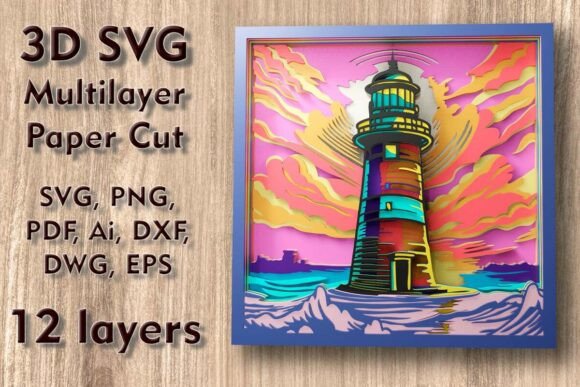
Lighthouse 3D SVG Shadow Box Paper Files
In the world of digital publishing, the difference between a scroll-past and a click-through often comes down to visual trust. As a blog designer who has spent years optimizing content for readability, engagement, and conversion, I approach every new graphic design asset with a critical eye. We are not just looking for something pretty; we are looking for something that communicates editorial quality, supports brand identity, and performs well across devices. Recently, I evaluated the Lighthouse 3D SVG Shadow Box Paper Files for potential integration into real-world content marketing workflows, affiliate marketing pages, and digital product offerings. Here is my honest review from the perspective of a publisher.
The Editorial Mood: Nautical Clarity Meets Modern Design
When you first load the preview of these files, the immediate impression is one of clean, structured elegance. The design leverages the depth inherent in 3D SVG technology to create a layered effect that feels tactile even on a flat screen. This is crucial for modern design trends where users expect a sense of dimensionality and sophistication. The lighthouse motif naturally evokes themes of guidance, safety, and steady presence—emotions that translate exceptionally well into educational content, travel blogging, or lifestyle branding.
Unlike generic clip art, this asset carries a specific aesthetic weight. It leans towards a clean, modern design style rather than a playful or overly decorative one. This makes it versatile for serious professional niches as well as creative small business branding. For a publisher, this means you can use it to anchor a header image without distracting from the headline text. It provides a strong visual hierarchy, allowing your typography to take center stage while the graphic adds context and mood. Whether you are building a brand identity for a coastal retreat booking site or creating a lead magnet for a photography guide, the nautical theme offers a timeless appeal that resonates with readers seeking clarity and direction.
Technical Specs and Scalability for Web Use
From a technical standpoint, the file specifications are robust for web deployment. The core design is based on a 270 x 270 mm (10.6 x 10.6 in) footprint, which serves as an excellent base for high-resolution output. One of the most valuable aspects of this 3D SVG multilayer paper cut format is its scalability. In content marketing, we often need to adapt visuals for various contexts, from large website headers to smaller social media graphics.
The ability to increase the size easily ensures that when you print this as a downloadable printable or use it in a high-DPI digital guide, the lines remain crisp and the layers distinct. However, a word of caution for fellow designers: be careful when reducing the design. Because the asset relies on thin elements to create its shadow box depth, scaling it down too far can cause those delicate layers to merge or become indistinguishable on low-resolution screens. For best results, maintain a minimum threshold for the smallest details, especially when designing for mobile thumbnails where pixel density varies significantly.
Real-World Publishing Applications
I tested this asset across several common publishing scenarios to see how it holds up in practice. The versatility of the Lighthouse 3D SVG Shadow Box Paper Files extends far beyond simple wall art concepts; they function beautifully as functional design assets for digital products.
- Blog Featured Images: Used as a background element behind bold serif fonts, the lighthouse adds depth without overwhelming the text. It works particularly well for articles about navigation, strategy, or travel.
- Pinterest Pins: The vertical composition potential of the layered design makes it ideal for Pinterest graphics. The contrast created by the shadows helps the pin stand out in a crowded feed, improving click-through rates.
- Digital Guides and eBooks: As a cover image or section divider, the asset elevates the perceived value of a digital download. It signals to the reader that the content inside is polished and professionally designed.
- Newsletter Headers: Incorporating the graphic into email marketing templates adds a touch of editorial flair. It breaks up text blocks effectively and reinforces brand recognition each time a subscriber opens their inbox.
- Canva Templates: If you offer Canva templates to your audience, including this layered SVG allows them to create dynamic, professional-looking social media posts with ease.
Performance and Brand Trust
Visual consistency is a cornerstone of reader trust. When your website banners, category thumbnails, and social media previews share a cohesive visual language, your content feels more authoritative. Using a high-quality asset like this supports stronger visual identity and better category recognition. It tells your audience that you care about the details, which subconsciously increases their confidence in your recommendations, whether you are selling an affiliate product or offering free educational resources.
Furthermore, the clean lines and balanced composition of the lighthouse design contribute to a better user experience. It avoids visual clutter, ensuring that the focus remains on the message. In an era of information overload, clear visual hierarchy is not just an aesthetic choice; it is a usability feature. By using this asset in your editorial layouts, you help guide the reader’s eye naturally through your content, reducing bounce rates and increasing time on page.
Where to Exercise Caution
While this asset is powerful, it is not a universal fit. There are specific contexts where it may not perform optimally. For instance, avoid using it as a primary icon in small mobile thumbnails where the fine details will be lost. Similarly, if your website operates in a highly corporate or minimalist niche, the decorative nature of the shadow box effect might clash with a strict monochromatic visual system. Additionally, ensure that you do not place the graphic against busy backgrounds or low-contrast colors, as this will diminish the 3D effect and reduce readability.
Practical Publisher Notes for Implementation
To get the most out of this creative design, I recommend following a rigorous testing protocol before full-scale deployment:
- Responsive Testing: Always preview the asset on desktop, tablet, and mobile screens. Check how it scales at different breakpoints.
- Typography Pairing: Experiment with pairing the graphic with different font styles. It pairs well with classic serif fonts for an editorial look, but also complements modern sans-serif fonts for a cleaner vibe. Avoid overly script or handwritten fonts unless you are aiming for a very specific artistic contrast.
- Contrast Checks: Test the graphic in black and white mode to ensure the layering still provides visual interest without relying solely on color.
- File Optimization: Review the file size for web performance. Even though it is an SVG, complex paths can impact load times. Compress images properly and consider converting to optimized PNGs for static uses where interactivity is not required.
- Licensing Verification: Confirm your commercial license before using the asset on monetized websites, affiliate pages, or paid content products. Ensure you have the right to use it for commercial design purposes.
Ultimately, the Lighthouse 3D SVG Shadow Box Paper Files offer a sophisticated tool for publishers who want to elevate their visual storytelling. By integrating this asset thoughtfully into your content marketing strategy, you can enhance the aesthetic appeal of your blog, improve the presentation of your digital products, and build a more trustworthy brand presence online.