Cute Running Corgi DIY 3D Papercraft: 3D SVG Animals for Branding
When I first pulled up the Cute Running Corgi DIY 3D Papercraft template, my immediate reaction was less about the craft itself and more about its potential as a graphic design asset for local business branding. As a brand designer who frequently advises small business owners on visual identity, I look beyond the novelty of a papercraft model to ask one critical question: Does this image support a cohesive, trustworthy, and memorable brand story? In this review, I am evaluating this specific 3D SVG asset not just as a toy or decoration, but as a component in a real-world packaging design and product label strategy.
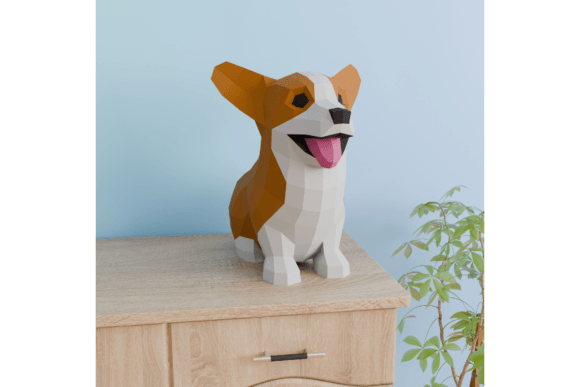
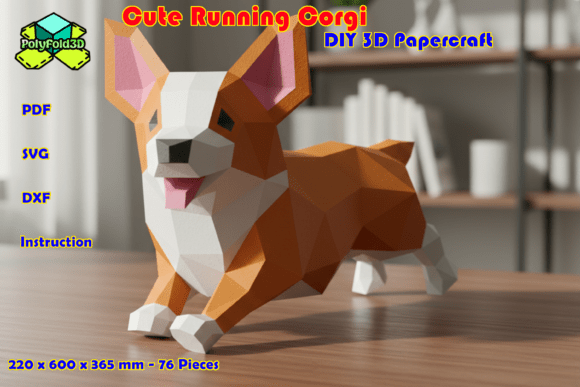
The asset features a joyful corgi rendered in a clean low-poly style. This geometric simplicity is crucial for modern small business branding. It avoids the clutter of hyper-realism while retaining enough character to feel warm and approachable. For a local bakery, a handmade soap boutique, or a pet-friendly cafe, this mood strikes the perfect balance between playful and professional. It suggests a brand personality that is friendly, energetic, and perhaps a bit whimsical, without veering into childish territory. This makes it an excellent candidate for visual hierarchy strategies where you want to draw attention to a logo or a key product feature without overwhelming the customer with text.
Evaluating Mood and Brand Personality Fit
The first step in integrating any design assets into a client’s portfolio is assessing the emotional resonance. The Cute Running Corgi Dog – DIY 3D Papercraft Template brings a sense of movement and lightness. The running pose implies action, freshness, and happiness—attributes that translate beautifully into marketing visuals for businesses that want to convey vitality. Whether you are designing for a morning coffee shop that prides itself on fresh energy, or a children’s product line that wants to appear safe yet exciting, this illustration anchors the brand in positivity.
However, brand consistency is paramount. If your business leans heavily into rustic, heritage, or ultra-luxury minimalist aesthetics, this asset might feel too modern or digital. The low-poly style is inherently contemporary. It pairs exceptionally well with modern design trends, sans-serif typography, and vibrant color palettes. It feels at home in the digital space, making it highly effective for social media graphics and web design, where crisp vector lines render sharply on high-resolution screens.
Practical Applications in Packaging and Print
In the realm of physical products, how this PNG design or vector file performs on actual materials is what separates a good idea from a great execution. I have tested similar assets on various substrates, and here is how the Corgi papercraft holds up in real local business scenarios:
- Product Labels and Stickers: The clean edges of the low-poly style allow for precise die-cutting. When used as a sticker seal on shipping boxes or as a primary graphic on jar labels, it provides a distinct visual anchor. It helps with product recognition, ensuring your item stands out on a crowded shelf.
- Hang Tags and Thank-You Cards: For handmade sellers, these elements are prime real estate for brand storytelling. Placing the corgi on a kraft paper hang tag adds a touch of charm that enhances perceived value. It transforms a simple transaction into a branded experience, fostering improved customer trust.
- Seasonal Campaign Visuals: The bright, cheerful nature of the asset makes it ideal for holiday packaging or summer promotions. It can be easily recolored to match seasonal themes (e.g., pastel pinks for spring, deep reds for winter) while maintaining its structural integrity.
- Promotional Ads and Flyers: In marketing visuals, large-scale reproduction is key. Because this is a SVE design (scalable vector graphic), you can blow it up to poster size without pixelation. This ensures that your professional branding remains crisp whether viewed on a smartphone screen or a billboard.
Strategic Integration into Brand Identity
Using this asset effectively requires understanding its role within your broader brand identity. It should not stand alone as a logo unless your brand name is secondary to the imagery. Instead, treat it as a supporting character in your visual narrative. Use it to break up text blocks in editorial design layouts, such as menu graphics or price lists. It adds whitespace management and visual interest, guiding the eye naturally through the information.
For web design, integrating this vector allows for lightweight page loads and smooth animations. You could even animate the "running" aspect slightly using CSS or GIF formats to create engaging social media campaign graphics that capture attention in fast-scrolling feeds. The dynamic nature of the corgi implies forward momentum, which subconsciously encourages user engagement and clicks.
Where Caution Is Required
No single asset fits every context. There are specific scenarios where using the Cute Running Corgi DIY 3D Papercraft would be a strategic misstep. Avoid placing this graphic in areas requiring high legibility or formal tone. For instance, do not use it as a primary icon for legal information areas on food labels, where clarity is legally mandated. Similarly, on very small labels, the intricate details of the low-poly mesh may become muddy if printed at low DPI.
Furthermore, consider the background contrast. Low-poly designs often rely on shading and color blocking to define their shapes. On low-contrast backgrounds, the asset may lose its definition. Always test your printable design proofs before mass production. Additionally, if your brand targets a luxury market that favors serif fonts and muted tones, this playful corgi may clash with the desired aesthetic of elegance and restraint.
Designer’s Checklist for Implementation
To ensure this commercial design asset integrates seamlessly into your project, follow these practical steps:
- Test on Real Mockups: Never judge a design asset solely on a white background. Export your layout and place it on realistic product mockups to see how it interacts with shadows, textures, and lighting.
- Check Black and White Usage: Convert the asset to grayscale to ensure it still reads clearly. This tests the strength of its form independent of color.
- Font Pairing: Experiment with different typefaces. See how the corgi sits beside a bold display font for headlines versus a delicate script font for signatures. The goal is clearer visual hierarchy.
- Inspect Vector Editability: Verify that the SVG file allows for easy color changes. This flexibility is essential for adapting the asset across different marketing visuals and seasonal campaigns.
- Confirm Commercial Licensing: Before using this asset for client work, physical product sales, or large-scale advertising, double-check the license agreement. Ensure you have the right to modify and distribute the clipart or illustration for commercial purposes.
Ultimately, the Cute Running Corgi DIY 3D Papercraft is more than a fun digital cutout; it is a versatile tool for enhancing product presentation. When used with intention, it elevates handmade business branding by adding a layer of personality and care that resonates with consumers. By treating it as a strategic component of your packaging design rather than just a decoration, you create a more polished, trustworthy, and emotionally connected brand experience for your customers.